Introduction
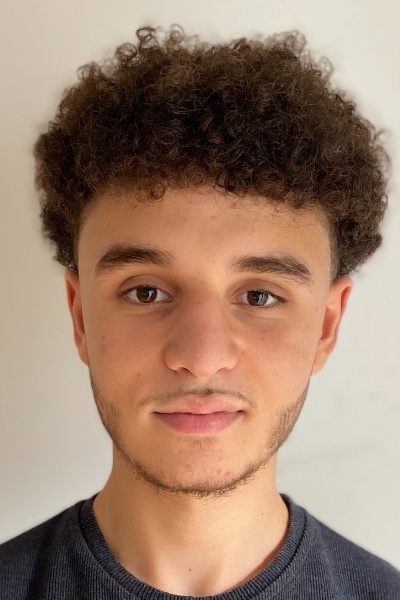
Hi, I’m Belkaceme Bella, a 21 year old Mechanical Engineering student at University College London with a strong interest in robotics for healthcare innovation. This interest first took shape in sixth form, when I was selected for the OxNet programme, an access scheme that introduces students to different areas of engineering, with my stream focused on AI and robotics. I was particularly inspired by a lecture on probabilistic robotics by Nick Hawes, which demonstrated how uncertainty and decision making can be formalised in autonomous systems and deepened my commitment to pursuing robotics. I also wrote an essay on the effects of bias in AI for the Pembroke College Essay Competition, which helped me think critically about the societal impact of intelligent systems. Later, I participated in the UCL Project Impactive Challenge, working in a team of four to design a cupholder for individuals with cerebral palsy. Our team placed first out of nine teams from across London. While the project allowed me to apply and refine my 3D modelling skills, it also showed me how engineering solutions can meaningfully improve accessibility and everyday life. Together, these early experiences shaped my career goal which is to work at the intersection of robotics and healthcare, using advances in autonomous systems to develop technologies that support both patients and clinicians.
My projects and experiences since then have bene focused around developing the skills required to break into the field of healthcare robotics. I’ve been a senior member of the UCL Rover team with this being my 3rd year running, where I have worked within a multidisciplinary team of 23 selected students to prepare our rover for the annual European Rover Challenge. I’ve led the design of the science cache, responsible for extracting, weighing and analysing regolith samples. I developed my teamwork skills by coordinating weekly team meetings to share technical updates and ensure key design decisions were made collectively.
In my second year, I worked in a team of 5 to participate within the IMECHE Design Challenge. Working under tight time constraints and strict technical requirements, I led the electrical design for an autonomous target-detecting vehicle. I followed a structured timeline which began with the prototyping phase, where I tested different component arrangements to establish a reliable setup. Then, I designed a two-layer PCB housing 18 total components, which ensured accurate target detection and smooth motion. I also collaborated with the mechanical design team to develop a wire harness and PCB casing design, where I applied Design for Disassembly principles to simplify troubleshooting. A 40% reduction was achieved in the time required to resolder a PCB component and reinstall onto the vehicle for the national finals compared with the regional finals. The vehicle achieved a 100% bullseye detection rate—the highest score in the competition’s history—and won the national finals, outperforming 50 teams across the country.
As a third year Mechanical Engineering student, my individual project brings together my mechatronics background and interest in healthcare by developing an autonomous robot to validate ventilation performance in operating theatres. The project, supervised by Professor Ian Eames, forms part of a wider effort to improve operating theatre layouts across the UK. The technical and research skills I have developed at UCL are preparing me for the next step in my education, where I plan to pursue the MSc in Human and Biological Robotics at Imperial College London, focusing on biomimetic design and assistive robotics for healthcare.
Outside of academia, I am an avid sportsperson and have competed in athletics, football, and swimming. I have represented the London Borough of Waltham Forest at the London Youth Games in the 50 m breaststroke, won gold in the 1500 m at the Essex Indoor Athletics Championships with Orion Harriers, and reached the U15 London Cup Finals in football. These experiences have helped me develop resilience, discipline, and teamwork—qualities that strongly influence how I approach both engineering projects and collaborative research.
